currency
Naira Gains Slight Momentum as New Week Opens
📊 Naira Gains Slight Momentum as New Week Opens March 17, 2026
Dollar to Naira Outlook, Oil Prices & Global Tensions Shape Market Direction
🔁 USD/NGN momentum building
🛢️ Oil & global tensions
As the new trading week begins on March 17, 2026, the Dollar to Naira exchange rate is showing early signs of short-term recovery, following a volatile but slightly encouraging performance last week. At the same time, global developments — particularly rising oil prices and escalating tensions in the Middle East — are creating a mixed outlook for the Nigerian economy and forex market.
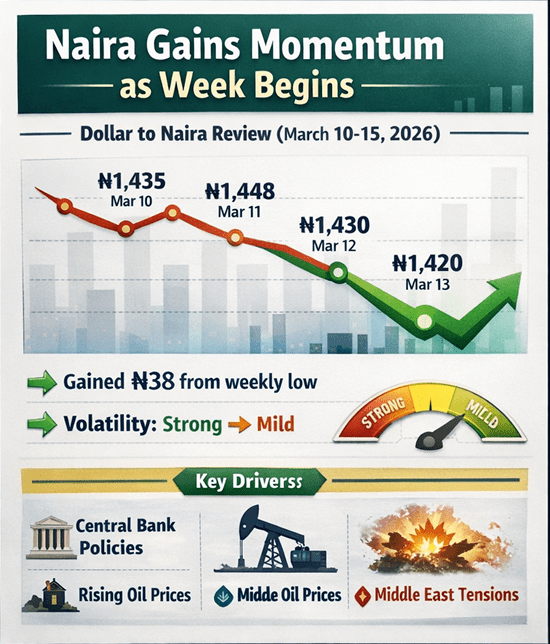
💱 Last Week’s Dollar to Naira Performance NairaFX recap
📉 Weekly highlights (March 10–15):
March 10: ₦1,435/$1 (weakened)
March 11: ₦1,448/$1 (peak weakness)
March 12: ₦1,430/$1 (rebound)
March 13: ₦1,420/$1 (recovery)
March 14: ₦1,416/$1
March 15: ₦1,410/$1 strongest
📊 Key Insight:
➡️ The Naira gained approximately ₦38 from its weakest point last week.
➡️ Volatility reduced from “Strong” to “Mild”, indicating market stabilization.
🧭 What Drove the Market Last Week?
- 1️⃣ Central Bank Influence – The Central Bank of Nigeria continues to play a critical stabilizing role. Recent policies: FX liquidity interventions, rate unification efforts, tight monetary stance.
🔗 https://www.cbn.gov.ng
➡️ As a result, market confidence improved slightly, helping the Naira recover. - 2️⃣ Rising Oil Prices Support the Naira – Oil prices have started climbing again, positive for Nigeria’s FX inflow. Nigeria earns most FX from crude exports → higher oil prices = more dollar inflow.
🔗 https://www.reuters.com/markets/commodities/
➡️ This contributed to late-week Naira strengthening. - 3️⃣ Middle East Tensions Add Uncertainty – Rising tensions involving Iran and Strait of Hormuz disruptions increase global uncertainty. Oil supply risks → price spikes; investor uncertainty → pressure on emerging currencies like the Naira.
🔗 https://www.bloomberg.com/middle-east
➡️ Therefore, while oil prices help Nigeria, geopolitical risks could trigger volatility.
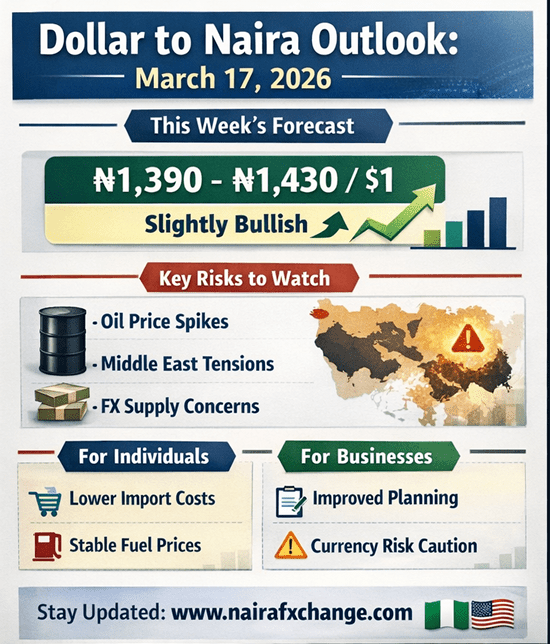
📈 Dollar to Naira Forecast This Week March 17 outlook
🔍 Short-Term Outlook: Slightly Bullish for the Naira
Based on: recent recovery trend, improved FX liquidity, rising oil prices
➡️ Naira could trade between ₦1,390 – ₦1,430/$1 early this week.
⚠️ Key Risks to Watch
- Sudden spike in global oil prices
- Escalation of Middle East conflict
- Weak FX supply in local markets
- Inflation pressure in Nigeria
➡️ These could quickly push the Naira back toward ₦1,450/$1 levels.
🔄 Market Sentiment (NairaFX)
- ✔ Momentum: Recovering
- ✔ Volatility: Declining (Strong → Mild)
- ✔ Trend: Short-term reversal forming
- ✔ Market Bias: Neutral to slightly bullish
🇳🇬 What This Means for Nigerians
💡 For Individuals
- Slight relief in import costs
- Temporary stability in fuel/goods pricing
- Opportunity to monitor rates before transactions
💼 For Businesses
- Better planning window for FX operations
- Reduced short-term currency risk
- Caution still advised due to global instability
🌐 Final Outlook: A Fragile Recovery
In conclusion, the Naira is showing “baby steps” toward recovery, but the market remains highly sensitive.
✅ Positive forces: Oil price gains, CBN intervention
⚠️ Negative forces: Global tensions, FX demand pressure
➡️ As a result, this week could be decisive in confirming whether the Naira’s recovery is sustainable or temporary.
📢 Stay Updated with Real-Time Rates
For live Dollar to Naira exchange rate updates, market trends, and forecasts:
👉 www.nairafxchange.com
Sources and rate context
NairaFX marketplace rates are not official CBN rates. NairaFX rates reflect member listings and the terms recorded for a specific marketplace transaction. Central Bank of Nigeria NFEM references describe the official market benchmark and may differ by time, source, route, amount and transaction conditions.
- Central Bank of Nigeria — official exchange-rate data
- Central Bank of Nigeria — Nigerian foreign-exchange market overview
- Central Bank of Nigeria — data and statistics
Bank procedures and regulatory requirements can change. Confirm current requirements with the relevant bank or regulator before acting.