Breaking News
Fujairah Oil Attack — What It Means for the Naira, Dollar & Fuel Prices
Fujairah Oil Attack — What It Means for the Naira, Dollar & Fuel Prices
📍 Geopolitical Alert • May 5, 2026 • 6 min read

🔻 Fujairah Oil Industry Zone — key global storage & export hub hit on May 4, 2026
⛽ A Shock to Global Energy Markets
On May 4, 2026, the global energy market was hit with a major disruption as drones and ballistic missiles struck the Fujairah Oil Industry Zone in the UAE — one of the world’s most strategic oil hubs. The attack triggered fires, disrupted operations, and escalated tensions in the Gulf, a region responsible for a large share of global oil supply.
⚡ Immediate aftermath Oil prices surged above $114 per barrel while shipping routes like the Strait of Hormuz faced renewed threats. This is not just a Middle East story — it has direct consequences for Nigeria and the Naira.
📍 Why Fujairah Matters Globally
Fujairah is not just another oil terminal. It is:
- A major global oil storage and export hub
- A key alternative route bypassing the Strait of Hormuz
- Capable of handling millions of barrels daily
When a facility like this is attacked: 👉 Global oil supply fears increase → Prices rise almost instantly → Currency markets react immediately.
📊 Immediate Market Reaction
🔥 Oil Prices Spike
Brent crude jumped above $114/bbl. Supply fears triggered a risk premium in oil markets.
💵 Global Dollar Strengthens
Investors move into “safe haven” assets like USD. Emerging market currencies (like Naira) face pressure.
🇳🇬 Impact on the Naira (May 2026 Context)
As of May 5, 2026: USD/NGN ~₦1,393 | Fuel price ~₦1,400 and rising. This is not a coincidence — it’s a chain reaction.

📉 Naira vs Dollar: rising global USD demand + import dependency fuel FX pressure
⚙️ The Economic Chain Reaction
Step 1: Oil Price Surge
Higher oil prices should theoretically help Nigeria (oil exporter). BUT…
Step 2: Dollar Demand Increases Globally
Countries scramble for USD to secure oil imports → global USD demand rises.
Step 3: Naira Faces Pressure
Nigeria still depends on imports (fuel, refined products). Higher oil prices = higher import costs → demand for USD inside Nigeria increases.
📌 Result: Naira struggles to strengthen significantly. Exchange rate stabilizes but under persistent pressure (~₦1,380–₦1,420 range).
⛽ Why Fuel Prices Are Rising in Nigeria
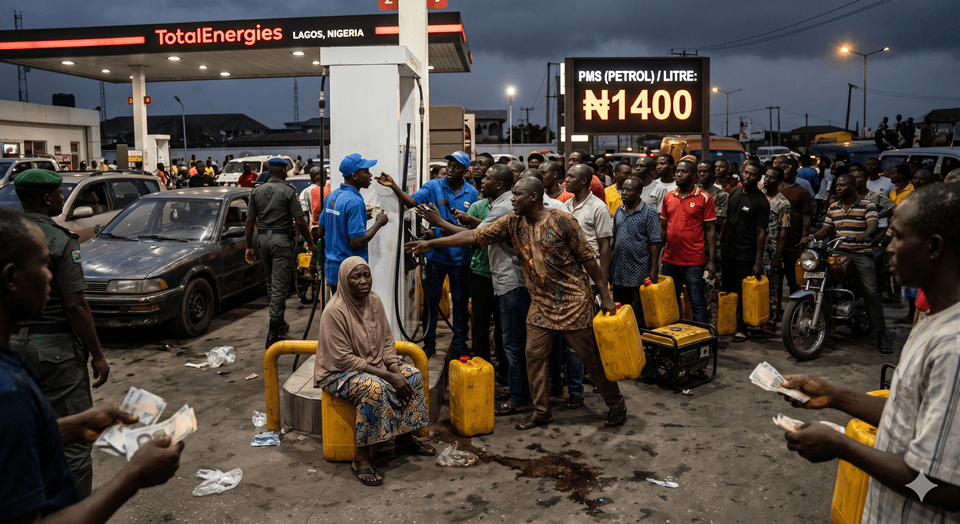
Even though Nigeria produces crude oil: it imports refined fuel. Global oil price increase → higher landing cost. FX rate (~₦1,393/$) amplifies the cost. That’s why fuel is now trending around ₦1,400/litre and rising.
⛽ Fuel price surge: ₦1,400/litre and climbing due to FX + crude shock
⚠️ Key Insight: This Is a “Double Pressure” Scenario
Nigeria is facing:
- External Pressure: Middle East conflict, oil supply disruption, stronger USD.
- Internal Pressure: FX demand, import dependency, market speculation.
📈 What Analysts Expect Going Forward
Short-Term Outlook (Next 1–4 Weeks)
- Oil prices likely remain volatile and elevated
- Naira may hover between ₦1,380 – ₦1,420
- Fuel prices likely continue rising
Medium-Term Outlook (1–3 Months)
Depends on 3 key factors:
- Geopolitical Stability: If attacks continue → oil stays high → Naira pressured. If tensions ease → relief in FX markets.
- USD Strength: If the dollar remains strong globally → Naira limited upside.
- Nigeria’s FX Supply: Improved liquidity could stabilize the market.
🎯 Investor Strategy (NairaFX Insight)
✅ For Naira Holders
Current stability (~₦1,390 range) may not last. Consider timing conversions carefully.
✅ For Dollar Holders
Rising oil + geopolitical risk = USD advantage in short term.
✅ For Traders
High-volatility setup phase: breakout likely if oil exceeds $120 or conflict escalates further.
🧭 Final Verdict: Calm Before Another Storm?
April gave us stability. May is introducing uncertainty again. The Fujairah attack shows one thing clearly: 👉 The Naira is no longer just influenced by Nigeria — it is now deeply tied to global conflict, oil flows, and USD dominance.
📌 Conclusion chain:
Oil attack → supply fears → oil price spike → USD demand → FX pressure → weaker/stable Naira → rising fuel prices in Nigeria.
🚀 Stay Ahead with NairaFX
Track real-time movements, anticipate market shifts, and make smarter exchange decisions with NairaFX insights. Bookmark our analysis hub for daily FX updates, geopolitical breakdowns, and import-export strategy.

🌍 Strait of Hormuz & global oil routes — renewed threats drive risk premium
↑ Back to top
Sources and rate context
NairaFX marketplace rates are not official CBN rates. NairaFX rates reflect member listings and the terms recorded for a specific marketplace transaction. Central Bank of Nigeria NFEM references describe the official market benchmark and may differ by time, source, route, amount and transaction conditions.
- Central Bank of Nigeria — official exchange-rate data
- Central Bank of Nigeria — Nigerian foreign-exchange market overview
- Central Bank of Nigeria — data and statistics
Bank procedures and regulatory requirements can change. Confirm current requirements with the relevant bank or regulator before acting.