currency
The State of the Naira: Stability, Holidays, and Global Pressures
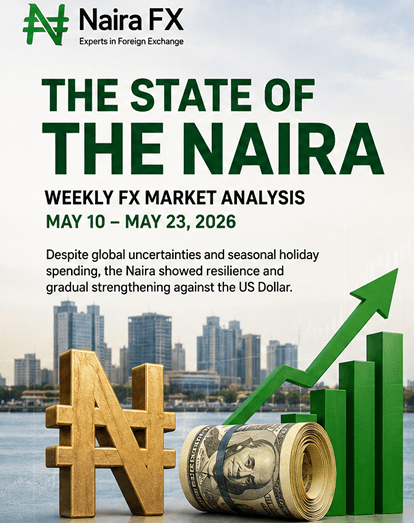
📊 Weekly Analysis · May 10 – 23, 2026
🔍 Naira FX Market Report
The State of the Naira: 23rd May 2026. Stability, Holidays, and Global Pressures
Naira FX Weekly Market Analysis (May 10 – May 23, 2026)
The Nigerian foreign exchange market entered the second half of May 2026 with cautious optimism as the Naira maintained relative stability against the US Dollar despite mounting global uncertainties. Between May 10 and May 23, 2026, the naira traded within a relatively controlled band, reflecting improved liquidity conditions and stronger market confidence.
Data from Naira FX showed that the USD/NGN exchange rate fluctuated mildly between ₦1,395 and ₦1,385, indicating one of the most stable trading periods witnessed in recent months. This performance came amid a mixture of global economic developments, domestic demand cycles, and seasonal spending patterns tied to the approaching Sallah celebrations and Nigeria’s Children’s Day holiday.
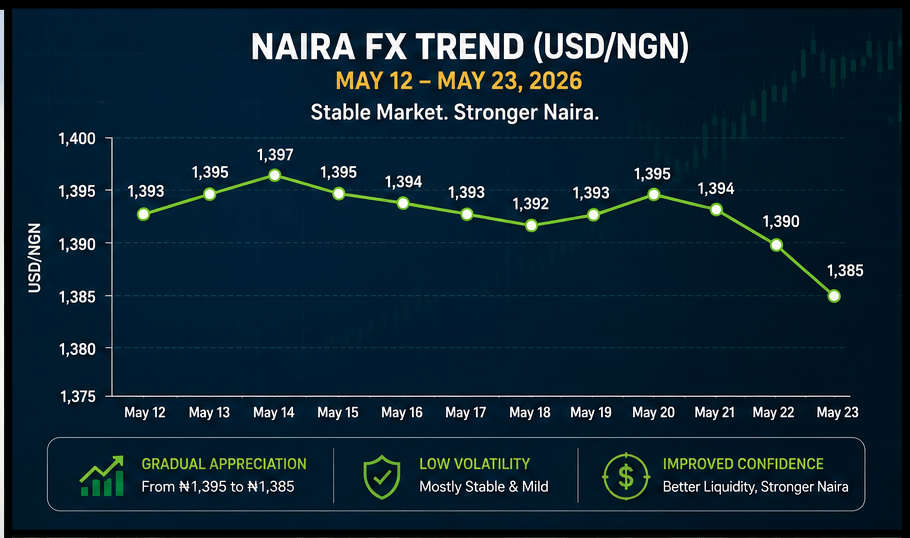
The period demonstrated that Nigeria’s FX market may be gradually entering a more balanced phase, supported by disciplined monetary policy, improved foreign inflows, and moderated speculative activity.
📈 Naira FX Market Performance Overview
Between May 12 and May 23, the Naira appreciated gradually from around ₦1,393/$ to approximately ₦1,385/$, representing a modest but psychologically important strengthening trend.
₦1,385Lowest rate (May 23)
₦1,397Highest rate (May 14)
₦12Trading spread
MildVolatility
- Lowest recorded rate: ₦1,385/$ on May 23
- Highest recorded rate: ₦1,397/$ on May 14
- Trading range: ₦12 spread
- Overall market volatility: Mild
- Market condition: Mostly stable with controlled fluctuations
The week opened with slight weakness around May 12–14, where the Naira touched ₦1,397/$ due to increased importer demand and cautious market sentiment. However, by May 15 onward, the currency began recovering steadily. By May 22 and May 23, stronger appreciation momentum emerged as the Naira gained against the Dollar, closing near ₦1,385/$. This movement suggested improving confidence within Nigeria’s parallel and retail FX markets.
📅 Daily Trend Snapshot
| Date | USD/NGN | Market Direction |
|---|---|---|
| May 12 | ₦1,393 | Mild Weakness |
| May 13 | ₦1,395 | Stable |
| May 14 | ₦1,396–₦1,397 | Peak Weakness |
| May 15 | ₦1,395 | Recovery Begins |
| May 16 | ₦1,394 | Stable |
| May 17 | ₦1,393 | Slight Strength |
| May 18 | ₦1,392 | Stronger |
| May 19 | ₦1,393 | Stable |
| May 20 | ₦1,395 | Temporary Pullback |
| May 21 | ₦1,394 | Stable |
| May 22 | ₦1,390 | Strong Appreciation |
| May 23 | ₦1,385 | Strongest Level |
Global Events Influencing the Naira
🇺🇸 US Federal Reserve Interest Rate Expectations
Global markets reacted positively to softer inflation signals coming from the United States. Expectations that the Federal Reserve may slow aggressive interest rate policies reduced pressure on emerging-market currencies, including the Naira. A weaker global Dollar environment often provides breathing space for frontier-market currencies because investors become more willing to hold riskier assets.
🛢️ Crude Oil Price Stability
Nigeria continued benefiting from relatively stable international crude oil prices during the period. Steady crude prices supported market confidence and foreign reserves, reassuring FX market participants about Dollar availability.
Improved Emerging Market Sentiment
Global investors showed increased appetite for emerging and frontier markets in May 2026 as recession fears eased slightly. Nigeria’s ongoing reforms in the FX market also reduced speculative panic.
📉 Global market indicators & emerging currency trends – stable sentiment supports Naira
Local Factors Supporting the Naira
Reduced Panic Buying: Throughout the period, retail traders and importers exhibited patience, reducing panic-driven Dollar purchases. This contributed heavily to the Naira’s stability.
Better Liquidity Conditions: Liquidity conditions in both official and parallel markets appeared healthier. The narrow movement range (₦1,397–₦1,385) signaled balanced supply and demand, reducing speculative distortions.
The Sallah Effect on the FX Market
As preparations for the Sallah celebrations approached, local demand patterns shifted. Typically, Sallah periods trigger increased travel spending, higher retail imports, and greater consumer demand. Historically festive periods can place temporary pressure on the Naira, yet the market absorbed the pressure relatively well. Diaspora remittances provided essential support, with increased inflows from Nigerians abroad ahead of the holidays.
Children’s Day and Consumer Market Activity
Nigeria’s upcoming Children’s Day celebrations also contributed to increased domestic commercial activity across fashion, food, entertainment, and transportation sectors. While Children’s Day does not directly impact FX markets as strongly as Sallah, stronger economic activity helped sustain positive market sentiment and short-term liquidity flows.

Sallah festivities & Children’s Day preparations – local spending and remittance inflows support Naira stability
Technical Analysis of Naira FX Data
From a technical perspective, the market showed several encouraging signals: a narrow trading band (₦12 total movement) reflected unusually low volatility, reduced speculative attacks, and improved FX liquidity. The progressive appreciation trend from May 15 (₦1,395 → ₦1,385) indicated strengthening Naira momentum. Most sessions were categorized as “Stable” or “Mild,” confirming a healthier market environment free from panic-driven swings.
Outlook for the Coming Weeks
Looking ahead, the direction of the Naira depends on US inflation data, Federal Reserve policy signals, international crude oil prices, and global investor appetite. Domestically, Central Bank FX interventions, foreign reserve levels, import demand after Sallah, and inflation trends will be critical.
Naira FX Forecast: If current liquidity conditions remain stable and global conditions stay supportive, the Naira could consolidate within the ₦1,370–₦1,400 range in the short term. Sustained appreciation, however, requires stronger foreign investment inflows, higher oil revenues, and continued market confidence.
Conclusion
The May 10–23, 2026 trading period marked an important phase of relative calm for the Nigerian Naira. Despite global uncertainties and seasonal spending pressures associated with Sallah and Children’s Day, the Naira demonstrated resilience and gradual strengthening against the US Dollar. Naira FX data revealed a market transitioning toward greater stability, supported by improved liquidity, calmer investor sentiment, and balanced demand conditions. While challenges remain, this controlled performance may signal that Nigeria’s FX market is gradually moving away from extreme volatility. For traders, businesses, and consumers, the coming weeks will be crucial in determining whether this newfound stability can be sustained.
Sources and rate context
NairaFX marketplace rates are not official CBN rates. NairaFX rates reflect member listings and the terms recorded for a specific marketplace transaction. Central Bank of Nigeria NFEM references describe the official market benchmark and may differ by time, source, route, amount and transaction conditions.
- Central Bank of Nigeria — official exchange-rate data
- Central Bank of Nigeria — Nigerian foreign-exchange market overview
- Central Bank of Nigeria — data and statistics
Bank procedures and regulatory requirements can change. Confirm current requirements with the relevant bank or regulator before acting.