currency
The Journey So Far in 2026
The Journey So Far in 2026
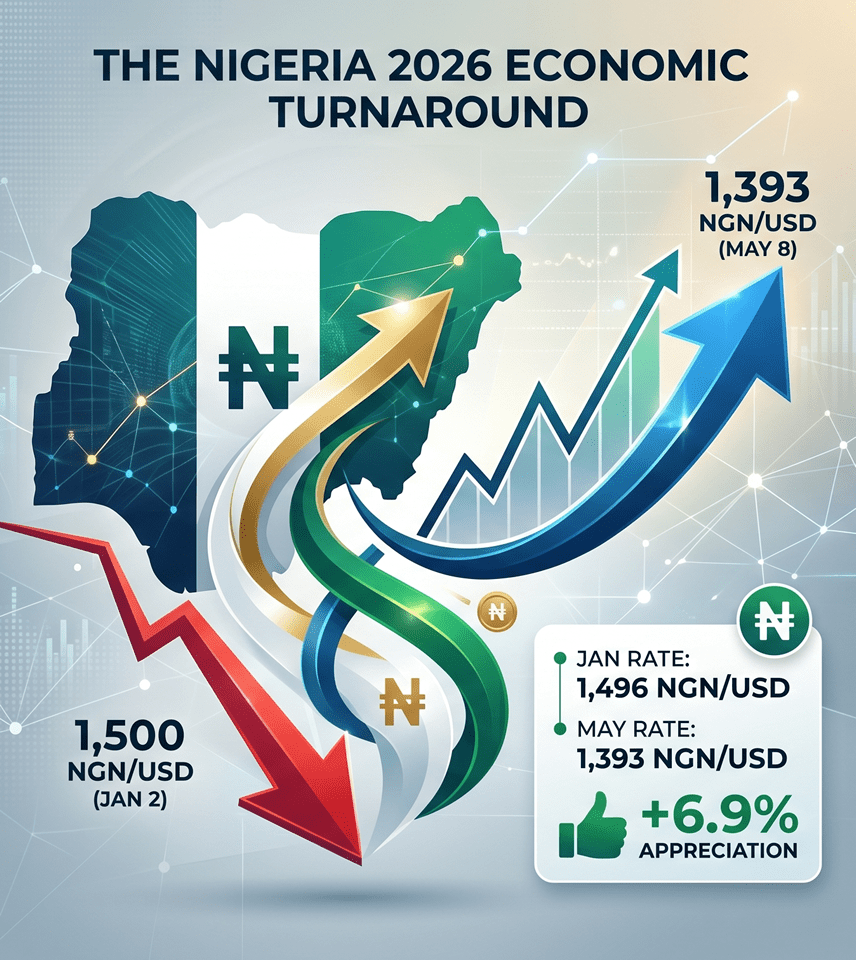
From Volatility to Stability — How the Naira Regained Ground in 2026 📅 May 8, 2026 ✍️ NairaFX Analytics 📊 FX Market ReviewAs of May 8th, 2026, the Naira is trading around ₦1,393 per US Dollar — a remarkable recovery from the intense pressures witnessed earlier this year. The journey from deep volatility to relative stability has captured the attention of traders, investors, and businesses across Nigeria. After starting the year under immense liquidity concerns and speculative dollar demand, the Naira has entered a phase of cautious optimism and improved FX management.
For businesses, importers, and everyday citizens, the first four months of 2026 have been a defining test of resilience. The exchange rate opened the year near ₦1,496/$, briefly touching ₦1,500/$ on January 2nd. Post-holiday liquidity shortages and a relentless chase for dollars pushed the currency to an early-year low, reviving fears of prolonged depreciation.
📌 EXECUTIVE SUMMARY
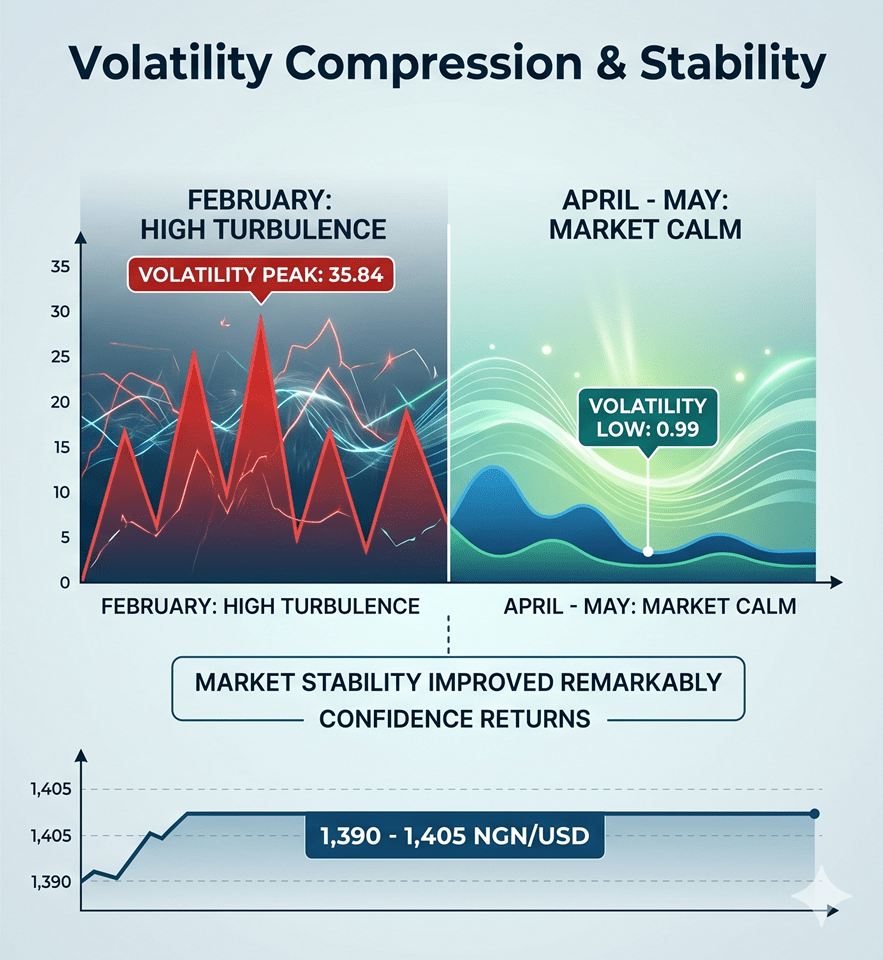
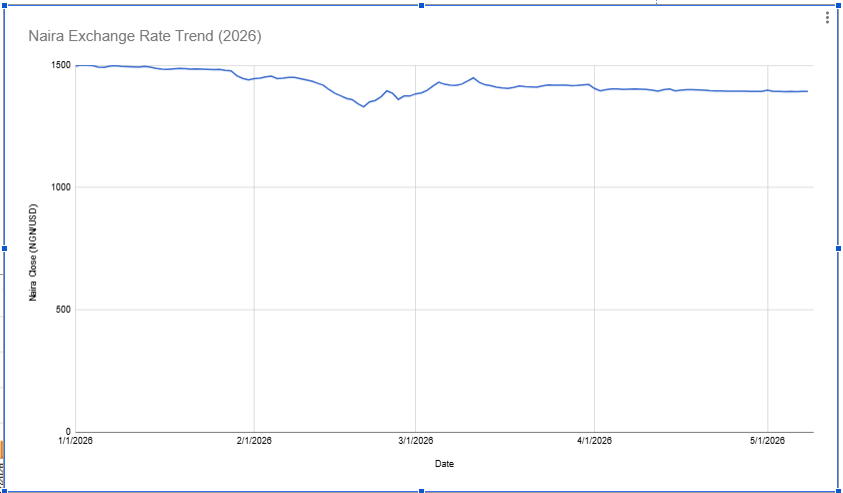
In the Journey So Far in 2026 The Naira has shown remarkable resilience after a mid-quarter low and extreme volatility. From opening near ₦1,496/$, the currency appreciated sharply in February, reaching a year-to-date high of ₦1,330/$ on February 20th. By early May 2026, the Naira has strengthened ~6.9% year-to-date, trading in a calm ₦1,390–₦1,405/$ range. Volatility compressed from 35.84 (Feb peak) to below 1.0 in late April — a sign of regained stability.
January 2026: Starting Under Pressure
January opened with persistent dollar demand, import pressures, and lingering energy costs. Global USD strength added headwinds, and the Naira surged toward ₦1,500/$. Many Nigerians feared another round of currency collapse. However, early signals of policy recalibration began to emerge. Weak market confidence and tight liquidity meant that the parallel market also felt the squeeze, but the CBN’s commitment to transparency started showing early contours.
February: The Turning Point — Appreciation & Turbulence
February became the most pivotal month. The Naira unexpectedly entered a strong appreciation phase, eventually touching ₦1,330/$ on February 20th. Multiple catalysts drove this move: increased foreign exchange liquidity, improved intervention strategies, reduced speculative hoarding, and stronger confidence in official market reforms. Additionally, higher oil-related inflows provided a boost.
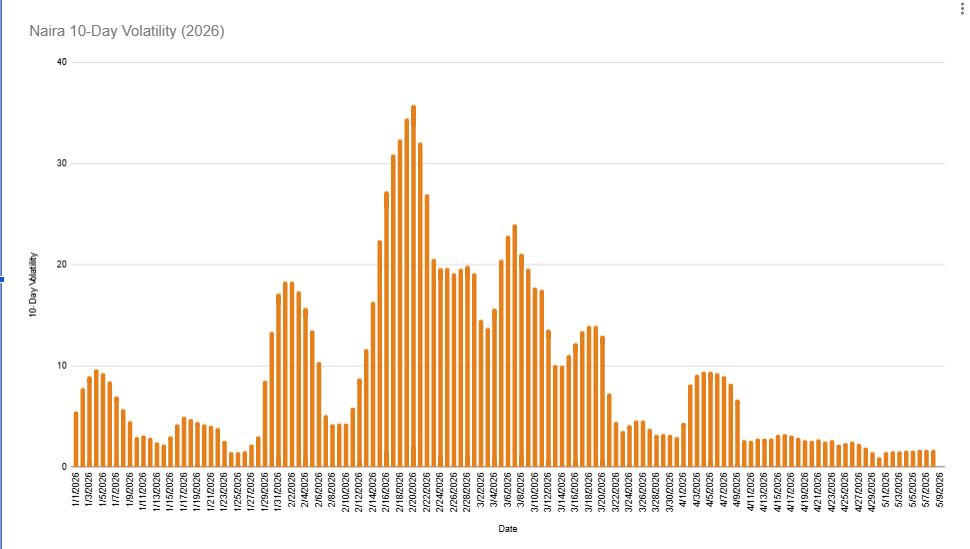
Yet this rally came with extreme turbulence: the market’s 10-day volatility index surged to 35.84 — the most volatile phase of 2026. Rapid swings and aggressive pricing adjustments kept traders on edge. Despite the instability, the appreciation phase proved a strong signal: the Naira retains recovery potential when liquidity and confidence align.
₦1,330/$2026 STRONGEST LEVEL (FEB 20) 35.84VOLATILITY INDEX (FEB PEAK) -6.9%NAIRA APPRECIATION YTDApril 2026: Stability Finally Emerges
By April, the market entered a mature stabilization phase. According to NairaFX tracking, the Naira traded consistently within the ₦1,393–₦1,405/$ range with only minor daily fluctuations. The atmosphere transformed from panic-driven trading to calm, calculated positioning.
- Reduced Volatility — The volatility index dropped below 2.0 by late April, reaching lows near 0.99. This marks one of the calmest trading periods Nigeria has experienced in recent years.
- Improved Market Confidence — Businesses regained pricing predictability, reducing panic-buying of dollars.
- Balanced Dollar Demand — Buyers and sellers found better equilibrium, narrowing trading bands.
- Better Liquidity Management — Consistent dollar supply and transparent interventions helped tame speculation.
Oil Prices, Global Events, and Their Impact on the Naira
Global developments continue to play a major role. Recent geopolitical tensions in the Middle East — including drone and missile attacks affecting Gulf oil infrastructure — have injected fresh uncertainty into energy markets. Higher crude oil prices can strengthen Nigeria’s foreign exchange earnings, as oil exports remain the largest source of dollar inflows.
However, a major caveat: Nigeria still relies heavily on imported refined petroleum products. Rising global energy prices increase domestic fuel costs, import expenses, and inflation pressure. As of early May 2026, fuel prices have approached ₦1,400 per litre, driving up transport costs and squeezing consumers. This delicate balance means higher oil prices benefit FX reserves but also raise domestic economic pressure.
What Analysts Are Watching Going Forward
Currency experts and traders are keeping a close eye on five critical indicators that will shape the Naira’s path through the rest of 2026:
🔹 Global Oil PricesSustained strength may boost reserves, but volatility remains a risk. 🔹 US Dollar Strength
A strong dollar could add pressure on EM currencies, including the Naira. 🔹 Nigeria’s FX Liquidity
Consistent dollar supply is key for stability maintenance. 🔹 Inflation & Fuel Costs
Persistent inflation may erode confidence and pressure the local currency. 🔹 Investor Sentiment
Policy consistency & transparency will sustain trust in the FX market.
Outlook for the Rest of 2026
At the current pace, the Naira appears to be entering a phase of cautious stability rather than dramatic appreciation or collapse. If volatility remains compressed and liquidity conditions stay supportive, analysts expect the Naira to continue trading within relatively stable bands in the near term. However, tail risks remain: any major oil supply shock, geopolitical escalations, sharp USD rallies, or domestic liquidity shortage could quickly alter market dynamics again.
For now, 2026 has delivered something many market participants hadn’t seen in a long time: a calmer, more predictable Naira market. The sharp reduction in volatility coupled with consistent exchange rate bands offers breathing room for importers, small businesses, and export planning.
💡 Final Thoughts
The journey of the Naira in 2026 has been defined by recovery, volatility, and gradual stabilization. From opening near ₦1,500/$ to stabilizing around ₦1,393/$, the currency has demonstrated resilience despite global uncertainty and domestic economic headwinds. The key question now is no longer whether the Naira can recover — but whether Nigeria can sustain the stability that the market is finally beginning to regain. For real-time exchange rate insights, FX analysis, and daily market updates, stay connected with NairaFX.
₦1,393/$CURRENT RATE (MAY 8, 2026) 0.99VOLATILITY INDEX (LATE APRIL) ~₦1,400FUEL PRICE PER LITRE📊 Note: Data as of May 8, 2026. FX market liquidity and policy adjustments will remain key drivers in the coming months. NairaFX provides daily tracking and actionable intelligence.
© 2026 NairaFX — Intelligent currency market analysis. Images used for editorial illustration.Sources and rate context
NairaFX marketplace rates are not official CBN rates. NairaFX rates reflect member listings and the terms recorded for a specific marketplace transaction. Central Bank of Nigeria NFEM references describe the official market benchmark and may differ by time, source, route, amount and transaction conditions.
- Central Bank of Nigeria — official exchange-rate data
- Central Bank of Nigeria — Nigerian foreign-exchange market overview
- Central Bank of Nigeria — data and statistics
Bank procedures and regulatory requirements can change. Confirm current requirements with the relevant bank or regulator before acting.