usd/naira
The State of the Naira: Navigating Q1 2026 with Stability and Reform

📊 FX MARKET INSIGHTS
The State of the Naira: Navigating Q1 2026 with Stability and Reform
📅 April 6, 2026
✍️ Naira FX Research Desk
⏱️ 5 min read
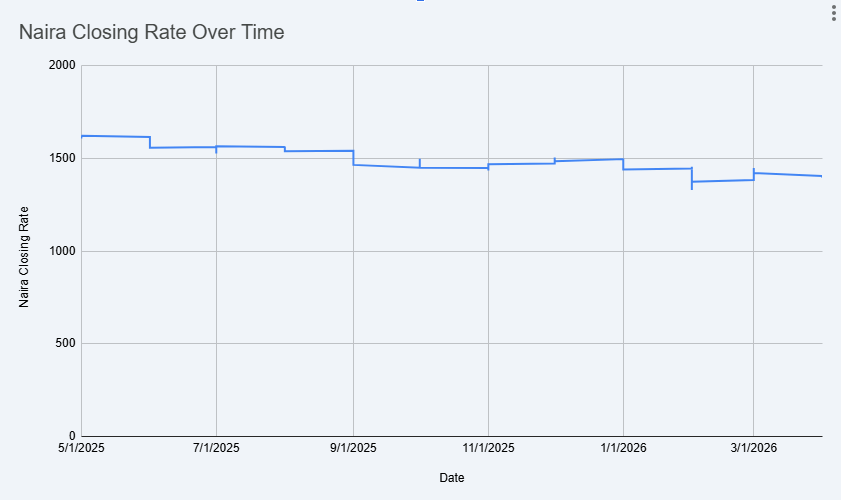
The first three months of 2026 marked a pivotal period for the Nigerian Naira. Following significant policy reforms in late 2025, Quarter 1 saw a notable shift towards macroeconomic stability. The narrative moved away from volatility and towards controlled appreciation and stability in the official foreign exchange (FX) market. This improved outlook was underpinned by coordinated monetary policy, rising external buffers, and a cautiously resilient global economy, all of which contributed to renewed market confidence.
📌 Key takeaway: The Naira recorded a historic appreciation in the official market, reaching ₦1,401.22 per dollar — the strongest level since the launch of the Electronic Foreign Exchange Matching System (EFEMS) in January 2026.
📉 Naira-Dollar Movement: Key Takeaways
The U.S. Dollar (USD) experienced a slight recovery globally in the early months of 2026, yet the Naira (NGN) showed strong resilience. Improved liquidity and central bank reforms drove a remarkable turnaround.
- Official FX Market Performance: The Naira strengthened to a record high of ₦1,401.22 per dollar in January 2026 following the implementation of EFEMS, reflecting improved transparency and market efficiency.
- External Reserves Boost: Nigeria’s external reserves climbed steadily to around $46.03 billion by late January 2026, providing a critical buffer to defend the currency and boost investor confidence.
- Market Projections: Analysts aligned on a stable outlook, projecting the Naira to trade within a range of ₦1,400 – ₦1,500 per dollar throughout 2026 — a strong vote of confidence in ongoing FX reforms.

🌍 Global Impact: A World of Steady Forces
Nigeria’s performance was set against an international backdrop the IMF described as a period of “steady amid divergent forces,” projecting global growth to remain resilient. Several global factors supported the Naira’s stability:
- Softening Global Inflation: Global headline inflation continued on a downward path, easing external pressure on the cost of Nigerian imports and complementing domestic disinflation efforts.
- Stable Commodity Markets: Oil prices remained relatively low, but a “soft price floor” provided by OPEC+ and stable global demand helped manage revenue expectations, minimizing sharp shocks to Nigeria’s FX inflows.
- Global Policy Context: While global financial conditions stayed broadly accommodative, the risk of “re-evaluation of productivity growth expectations about AI” and continued trade tensions posed monitored risks, influencing foreign portfolio flows to emerging markets like Nigeria.
🏦 Domestic Economic Indicators: Beyond the Exchange Rate
The stability of the Naira was mirrored by improvements in other core domestic indicators, signaling a broader macroeconomic reset.
- Inflation Moderation: Nigeria’s annual inflation rate eased in the first two months of 2026, dropping to 15.06% in February 2026. This marked the 11th consecutive month of decline, supported by a stronger currency and the CBN’s tight monetary stance.
- Monetary Policy Shift: In a sign of cautious optimism, the Central Bank of Nigeria (CBN) cut the Monetary Policy Rate (MPR) by 50 basis points to 26.50% in February 2026 — the first easing step as inflation expectations continued to moderate.
- Trade Dynamics & Diversification: While overall merchandise trade saw a slight decline, non-crude oil exports grew to account for nearly 49% of total exports, highlighting a gradually expanding and diversifying economic base — a healthy long-term sign for FX resilience.
📈 GDP Growth Outlook: Backed by FX stability and lower inflation, Nigeria’s economy is projected to grow by approximately 4.3% in 2026, according to the latest economic outlook reports.
🔮 Conclusion: A Foundation for Growth
The first quarter of 2026 established a more stable foundation for the Naira. The combination of structural reforms (EFEMS), a rise in external reserves to $46 billion, and a supportive global environment positioned Nigeria for improved macroeconomic stability. With inflation trending downward and the CBN entering a gradual easing cycle, business and investor confidence is likely to strengthen further. The Naira’s resilience in Q1 2026 proves that policy consistency and external buffers can deliver tangible results, setting the stage for sustained FX stability and growth.
📚 Further Reading & Authoritative Sources
- 🌐 IMF World Economic Outlook, January 2026: “Global Economy: Steady amid Divergent Forces”
- 📊 Nigeria Economic Outlook 2026 – Strategy& (PwC)
- 📰 Naira hits record N1,401.22/$ since EFEMS – BusinessDay NG
⚡ Disclaimer: This analysis is based on authoritative market reports and economic outlooks available as of Q1 2026. FX market conditions may evolve. Always consult official sources for real-time data.
Sources and rate context
NairaFX marketplace rates are not official CBN rates. NairaFX rates reflect member listings and the terms recorded for a specific marketplace transaction. Central Bank of Nigeria NFEM references describe the official market benchmark and may differ by time, source, route, amount and transaction conditions.
- Central Bank of Nigeria — official exchange-rate data
- Central Bank of Nigeria — Nigerian foreign-exchange market overview
- Central Bank of Nigeria — data and statistics
Bank procedures and regulatory requirements can change. Confirm current requirements with the relevant bank or regulator before acting.