currency
The State of the Naira: Rising Fuel Costs, Global Tensions, and a Fragile Balance

📊 FX MONITOR • MARCH 2026
The State of the Naira: Rising Fuel Costs, Global Tensions, and a Fragile Balance
📅 March 24, 2026 • Market Close
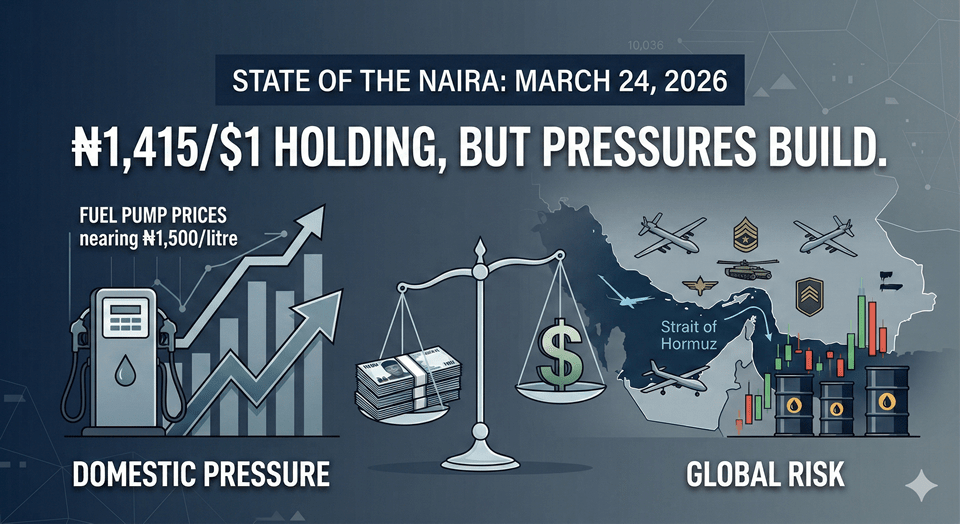
💵 Dollar to Naira Holds Near ₦1,415 as Global Uncertainty Builds
Official / Parallel Market Reference
₦1,415 / $1 USD
Naira holds relative short-term stability
⚠️ Fragile equilibrium • resistance at ₦1,415
Although the Naira has shown relative short-term stability, underlying pressures from both domestic economic realities and international geopolitical tensions suggest that the road ahead may be turbulent. Fuel prices approach ₦1,500/litre, amplifying forex demand and inflation risks.
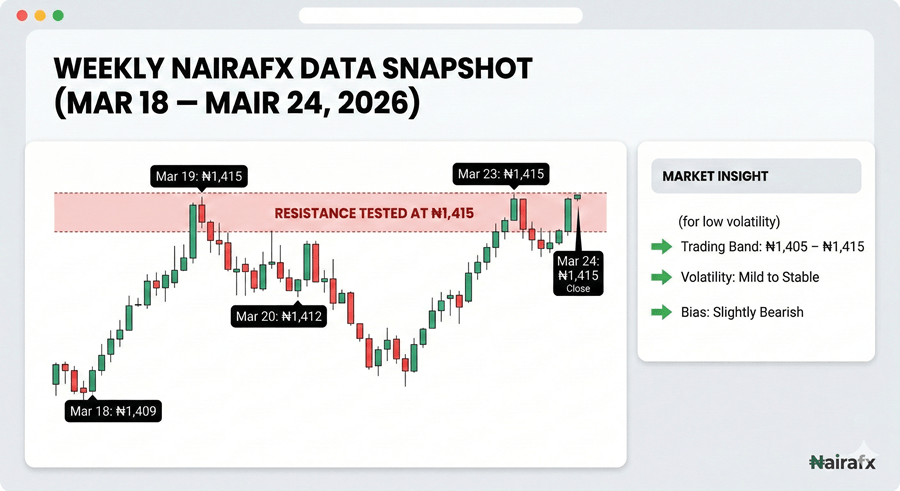
💱 Weekly NairaFX Data Snapshot (March 18 – March 24)
| Date | Exchange Rate (₦/$) | Movement |
|---|---|---|
| March 18 | ₦1,409 | ▼ Mild weakening |
| March 19 | ₦1,415 | ▼ Further pressure |
| March 20 | ₦1,412 | ▲ Slight recovery |
| March 21 | ₦1,411 | ➡ Stabilizing |
| March 22 | ₦1,410 | ➡ Stable range |
| March 23 | ₦1,415 | ▼ Renewed pressure |
| March 24 | ₦1,415 | 🔁 Market close level |
📊 Key Insight:
➡️ The Naira remained within the ₦1,405 – ₦1,415 band
➡️ Volatility dropped to “Mild to Stable”, signaling temporary equilibrium
➡️ However, repeated tests of ₦1,415 resistance suggest underlying weakness
⛽ Rising Fuel Costs
Fuel prices nearing ₦1,500 per litre are not just a domestic concern—they are a major forex signal.
- Higher fuel costs increase import demand for dollars
- Transportation & production costs rise → inflation pressure
- Increased inflation weakens consumer purchasing power
➡️ Demand for USD continues to outpace supply, putting pressure on the Naira.
🌍 Global Risk: Iran & Oil Routes
Concerns rise over prolonged conflict involving Iran, especially around the Strait of Hormuz — a critical oil transit chokepoint.
- Strait of Hormuz handles ~20% of global oil supply
- Attacks on vessels increase market uncertainty
- Oil prices surge due to supply fears
➡️ Higher oil prices may boost Nigeria’s revenue but also: increase global inflation, strengthen the US Dollar, and create volatility in emerging markets.
🖼️ Visual Insights
🏦 The Role of the Central Bank of Nigeria
The Central Bank continues efforts to stabilize the forex market, including:
- FX liquidity interventions
- Exchange rate reforms
- Monetary tightening policies
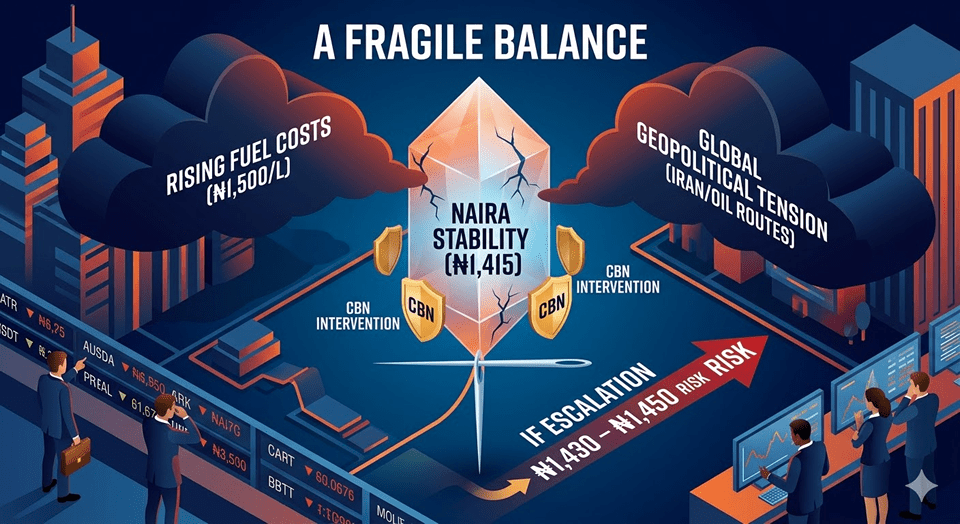
➡️ These measures have helped keep the Naira within a controlled range, preventing sharper depreciation.
Structural challenges remain: Limited FX inflows, high demand for imports, investor uncertainty.
📈 Market Sentiment: Calm on the Surface, Pressure Beneath
🔍 Momentum: Neutral
📉 Volatility: Mild to Stable
📊 Trend: Sideways movement
⚖️ Market Bias: Slightly bearish under pressure
➡️ The Naira appears stable—but this stability is fragile and highly reactive to global events.
⚠️ What Happens If Iran Conflict Escalates?
If tensions escalate further:
- Oil prices could spike sharply
- Global markets may shift toward the US Dollar (safe-haven flow)
- Emerging currencies like the Naira may weaken
➡️ This could push the exchange rate toward ₦1,430 – ₦1,450/$1 in the short term.
💡 Individuals
Higher cost of living due to fuel and import prices. Increased pressure on household spending. Need to monitor exchange rates closely and hedge where possible.
💼 Businesses
Rising operational costs, forex uncertainty affecting planning, and potential margin pressure for import-dependent sectors. Diversification strategies become vital.
🔮 Outlook: Stability or Storm Ahead?
In conclusion, the Naira is currently in a holding pattern, supported by policy efforts but challenged by rising fuel prices, strong dollar demand, and global geopolitical risks.
➡️ While the market appears stable today, the combination of domestic inflation and international tension suggests that this stability may not hold for long.
Stay vigilant — real-time data is your edge.
📢 Stay Ahead with Real-Time Data
For accurate, real-time Dollar to Naira exchange rates, insights, and forecasts:
👉 Visit www.nairafxchange.com →
NairaFX Market Intelligence • March 24, 2026 • Data based on official and tracked parallel market indicators.